AMENDMENT DATED JAN. 31, 2023 · PARAGRAPH 1
“Landlord and Tenant both acknowledge and agree that the Lease is currently in effect and that neither party is in breach or default of the Lease.”Inspect no-default excerpt
THE TITLE TRAP / THE EVIDENCE BEFORE THE ARGUMENT
A family arrangement became a fight over equity, title and possession. We had to protect the business while answering allegations in court, police reports and regulatory processes. Here is our account—with the money, the messages, the requested remedies and the outcomes beside it.
The sharpest question is about what they were willing to request: why seek possession of an operating adult family home when the ownership and payment history remained disputed? We can show the choices, the escalation and the stakes. Their private intentions remain a different question.
01 / The understanding before the deed
Before closing, Romeo described the house as belonging to Jun and Aileen, while all four would take part in the care business. Aileen then replied (working translation of the preserved Cebuano) that she would not consider the house theirs alone: although it might be in their names, “it belongs to the four of us.” She acknowledged that the down-payment money came from Romeo and Annie and described repayment once there was income so the arrangement would be equally fair. That is a documented, pre-closing acknowledgment of a shared expectation, not an after-the-fact invention. It is not an executed deed or a court determination of precise percentages.
The formation record makes the AFH context harder to dismiss: the house was acquired for a planned adult family home and the Washington Secretary of State's April 15, 2021 filing named Romeo, Annie, Jun and Aileen as the four incorporators of ABC Elder Care. A separately signed April 15 shareholder agreement instead names Annie (51%) and Romeo (49%) as issued shareholders. Four incorporators establish participation in formation, not four equal stock certificates or a conveyance of real estate.
The displayed 2021 images are two captured fragments from a derivative message record, not a continuous native-platform export. The boundaries between these pieces must not be mistaken for proof that every intervening message is displayed.
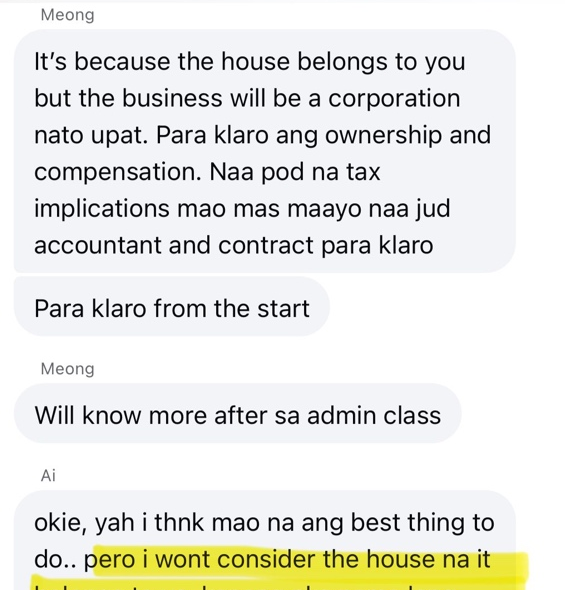
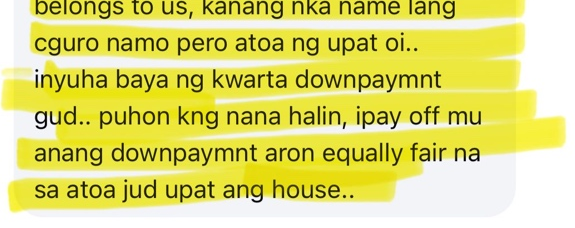
"kanang nka name lang cguro namo pero atoa ng upat oi"Quoted source-language excerpt attributed to Aileen; working translation refers to a house in their names but shared by four.
A purely rent-only history cannot simply skip a pre-closing discussion of beneficial participation and who supplied the down payment.
Romeo's preceding message described the house as theirs. The continuation anticipates repayment and eventual fairness among four. Signed gift forms say repayment was not expected. A message is not a deed, and the English rendering was attested by a fluent native Cebuano-speaking party, but not independently retranslated.
ADDITIONAL CONTEMPORANEOUS CONTEXT
The May 1, 2021 native-message extracts record Aileen saying she had no savings or investments and expected not to fund startup expenses, while offering later hands-on work rather than administrative leadership. She also left the decision about continued partnership to Romeo and Annie. The exchange is not proof that all rights were surrendered. Read her statement and Romeo's response in context →
02 / The money was not imaginary
Our position does not depend on a vague claim that we "paid for everything." It rests on identified transactions and a real question: how could a substantial acquisition contribution coexist with a later story that treated us as ordinary tenants alone?
Not just a claimed contribution. Bank imaging shows Romeo and Annie's January 19, 2021 $2,000 check to Fidelity National Title, which cleared January 20; the estimated borrower’s statement credits a $2,000 deposit. Romeo's March 10 $38,696.74 wire matches the remaining cash-to-close entry. Together these documents support $40,696.74 in gross acquisition cash supplied from their side, not the full purchase price. Fidelity's underlying trust-ledger receipt is a residual corroboration item, not a reason to describe the closing-document deposit as unknown. Jun and Aileen signed the substantial FHA borrowing obligation. Separately, a June 14 Bank of America statement records a $1,000 incoming Jun payment following the June 13 “IOU” discussion; the transaction is documented, although the parties dispute its ultimate legal and financial classification.
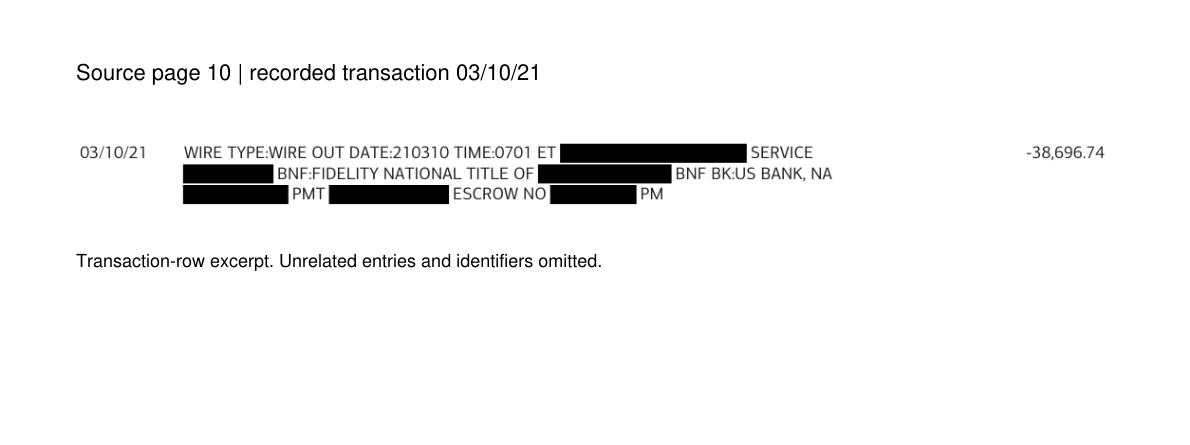
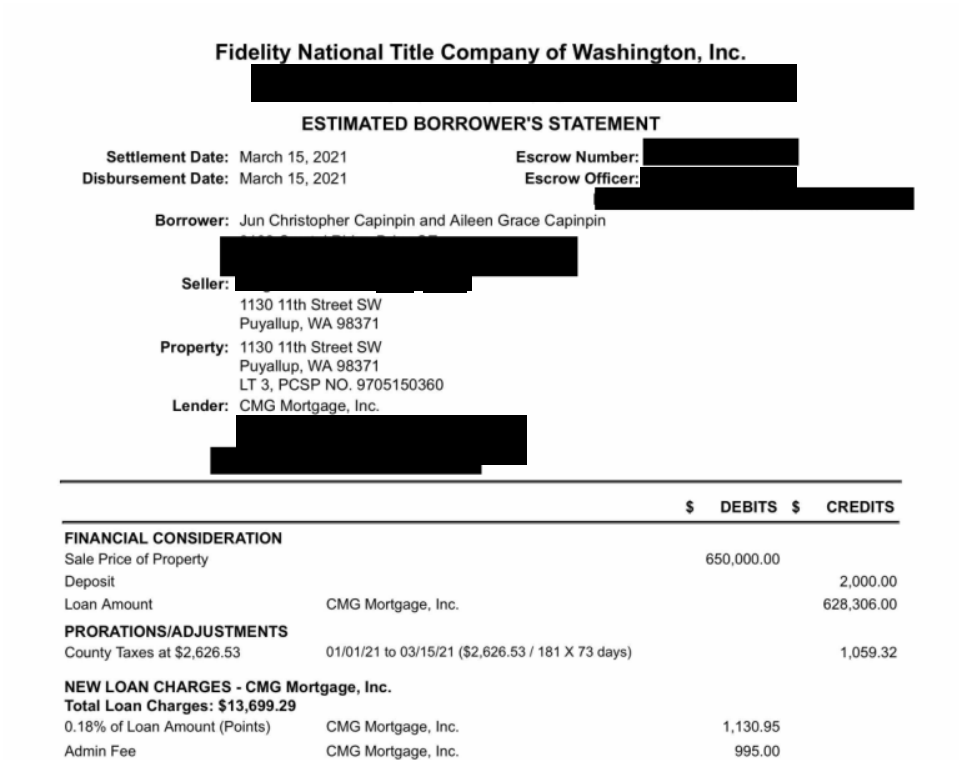
Bank and escrow records match the $38,696.74 wire from Romeo's personal account to the property's closing cash-to-close amount. A separate $2,000 check cleared January 20 and the estimated borrower’s statement credits a $2,000 deposit. The underlying escrow trust receipt remains a useful additional confirmation. These records demonstrate specific acquisition funding without deciding its legal character or establishing an ownership percentage.
The Capinpins were mortgage borrowers, bore credit exposure and made early contributions. The displayed escrow statement is estimated, the gift forms say no repayment was expected, and the bank/escrow transactions alone do not decide the legal character of funding, exclusive ownership, or any equitable remedy.
CAPACITY AND TITLE ARE DIFFERENT QUESTIONS
Contemporaneous records document Romeo and Annie's cash resources, $825,000 and $1.2 million conditional conventional prequalifications, and a later $950,000 Edgewood closing. Together they challenge blanket claims of inability to buy property, rather than establishing approval for Silver Creek's specific FHA loan. Jun and Aileen's 2025 explanation—that FHA eligibility and financing limitations were why we were not on title—must be read beside those records. A prequalification was not a binding approval of the Silver Creek loan, and the Capinpins' FHA loan exposure was real. See the full documentary comparison →
03 / The change in their own words
These are messages in distinct settings, and the order matters. On July 18, 2025, Jun circulated an informal option to “Reinstate 50/50 Ownership” and “Revert to the original ownership structure”; his screenshot also includes a sale alternative and predates the later formal counsel-led negotiations. On July 19, an excerpt attributed to Aileen asked, “inyuha diay ang silver creek? delusional” (a rhetorical challenge to Romeo and Annie's claim) and urged them to find a lender who would approve them. In the July 20 message preserved as a quotation inside Romeo's reply, Aileen is attributed the words “ANOTHER business loan” and “OUR house, Silver Creek.” The June 26 message described the Capinpins' FHA and other financing risks. These conflicting characterizations matter; neither the informal proposal nor any excerpt is a judicial finding of ownership or intent.
Important source boundaries: The June 26 screenshot is a TRUNCATED MESSAGE EXCERPT ending mid-sentence. The July 20 phrase is quoted inside Romeo's reply and attributed to Aileen; an original email sent from her account has not been independently verified. The visible language raises a serious question about the parties' ownership descriptions, not a judicial finding.
Read the June ownership wording and separate follow-ups — 6 pages
The readable source-derived selection preserves Aileen’s mortgage, FHA, credit and refinancing-risk explanation. It also presents her separate quitclaim follow-up as its own entry, rather than reconstructing the truncated screenshot’s ending. The core statements already appear in the approved native-message reader; this companion makes that context easier to inspect. Her asserted financing losses remain unverified, and the messages are negotiating positions, not a title judgment.
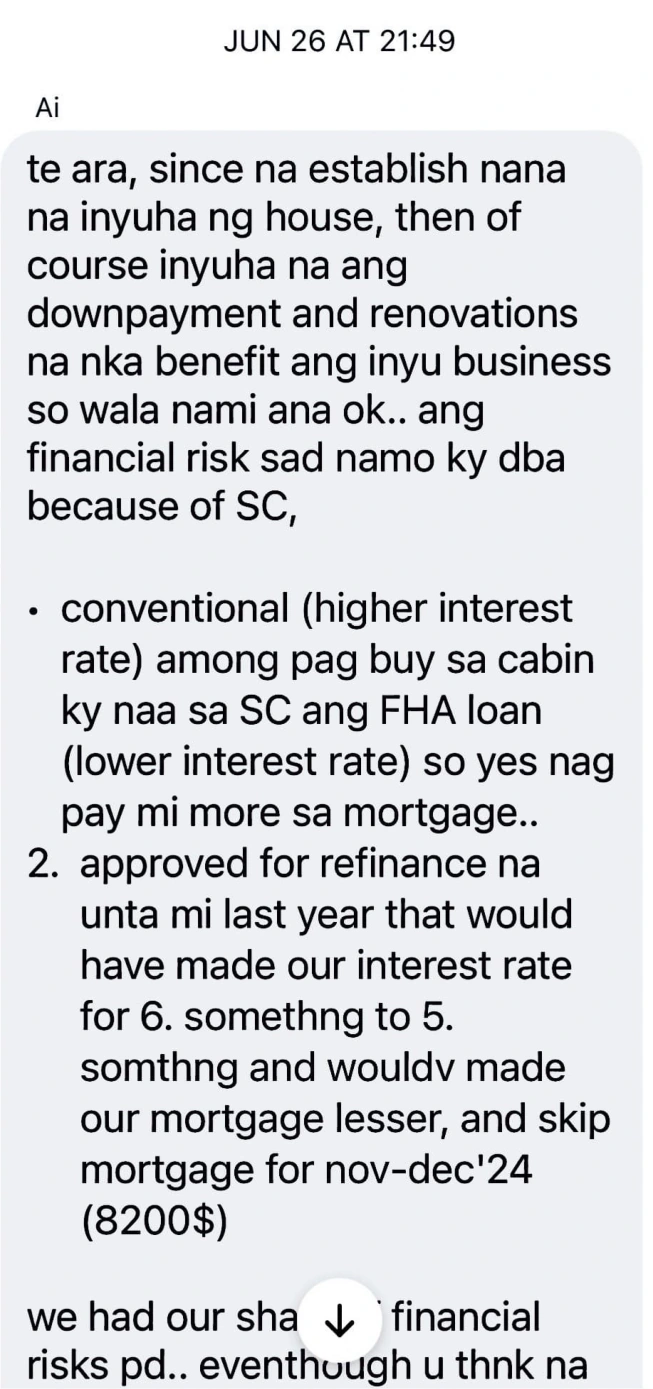

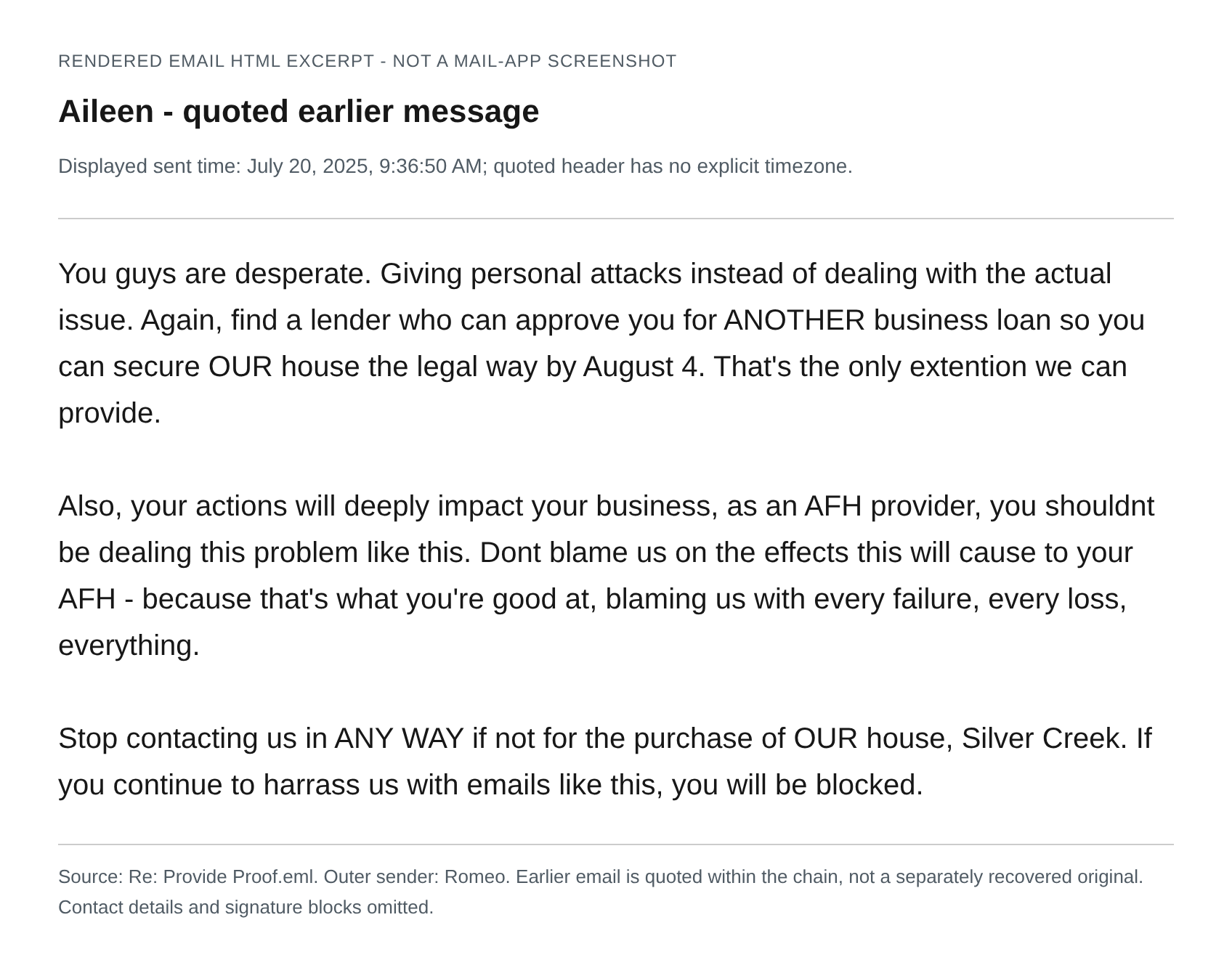
One house. Three sharply different ownership descriptions. The consequence is a question the record poses, not a verdict as to what anyone secretly intended.
Their own messages demonstrate that the parties were arguing about more than late rent. The June and July descriptions cannot be collapsed into one timeless, uncomplicated ownership narrative.
The Capinpins remained the recorded owners and mortgage borrowers. June language appears in negotiations; July arose after missed financing deadlines and amid hostile exchanges, including Romeo's replies. The July email is recovered through quoted reply text, not a separately authenticated native Aileen EML.
THE BENEFIT OF THE WORK
The improvement record is not proof of a particular ownership percentage or renovation appraisal. But the actual exchange matters. An argument that the work benefited only our company must be read beside the acknowledgment that increased property value would benefit the titled owners.
The house was intended to become an adult family home, and the permanent renovation work was bound up with that use. Jun's September 2024 equity formula spoke of deducting expenses before splitting a remainder; in July 2025 Aileen discussed deducting renovation costs with interest before a proposed division. That complicates a blanket claim that the operating company alone benefited and that improvement costs should be ignored. Actual title, lease obligations, and a verified capital-expense ledger still control what can responsibly be claimed.
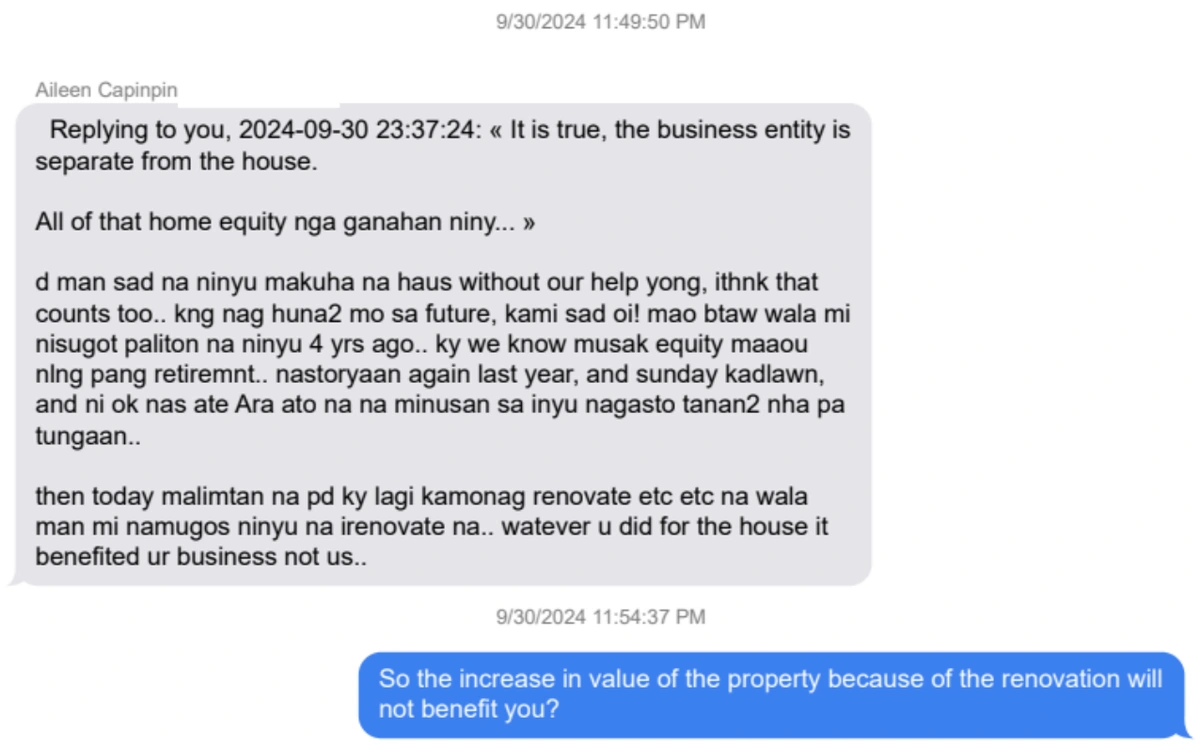
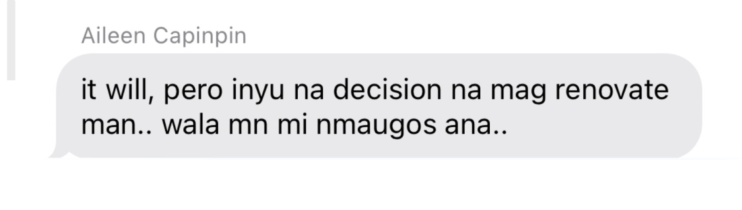
Their own response acknowledges some value benefit; an absolute denial of any benefit from improving the building is not sustainable on these excerpts.
Their response also says Romeo and Annie chose the work. The lease assigns costs and maintenance duties to ABC. An admission of benefit is not agreement to reimburse, proof of fraud, or a judicial valuation of equity.
Go deeper: the 2023 accommodation, later withholding and demand arithmetic →
04 / One signature and one pleading
These documents demand reconciliation, not deference. Paragraph 1 of the amendment, which bears a January 31, 2023 date but was reportedly executed September 26, 2024, states that neither party was in breach or default. Paragraph 12 of the Capinpins' November 2025 pleading alleges unpaid amounts beginning October 1, 2021. The earlier-claimed amounts and the amendment's no-default recital require a transparent explanation of what was owed, credited, waived or later disputed; the date appearing on the document must not be mistaken for independently verified 2023 execution. The pleading does not supply that accounting merely by calling the total rent.
The amendment is dated January 31, 2023 in its text; the reported September 26, 2024 execution date requires original signing-record verification. The November 2025 pleading calls the amendment date "November 31, 2023" and alleges charges from October 1, 2021. That apparent drafting error is not evidence of intentional falsification.
AMENDMENT DATED JAN. 31, 2023 · PARAGRAPH 1
“Landlord and Tenant both acknowledge and agree that the Lease is currently in effect and that neither party is in breach or default of the Lease.”Inspect no-default excerpt
FILED COMPLAINT · NOVEMBER 24, 2025 · PARAGRAPH 12
“ABC has failed to pay rent and other amounts due under the Lease Agreement and Lease Amendment beginning October 1, 2021.”Inspect alleged-arrears excerpt
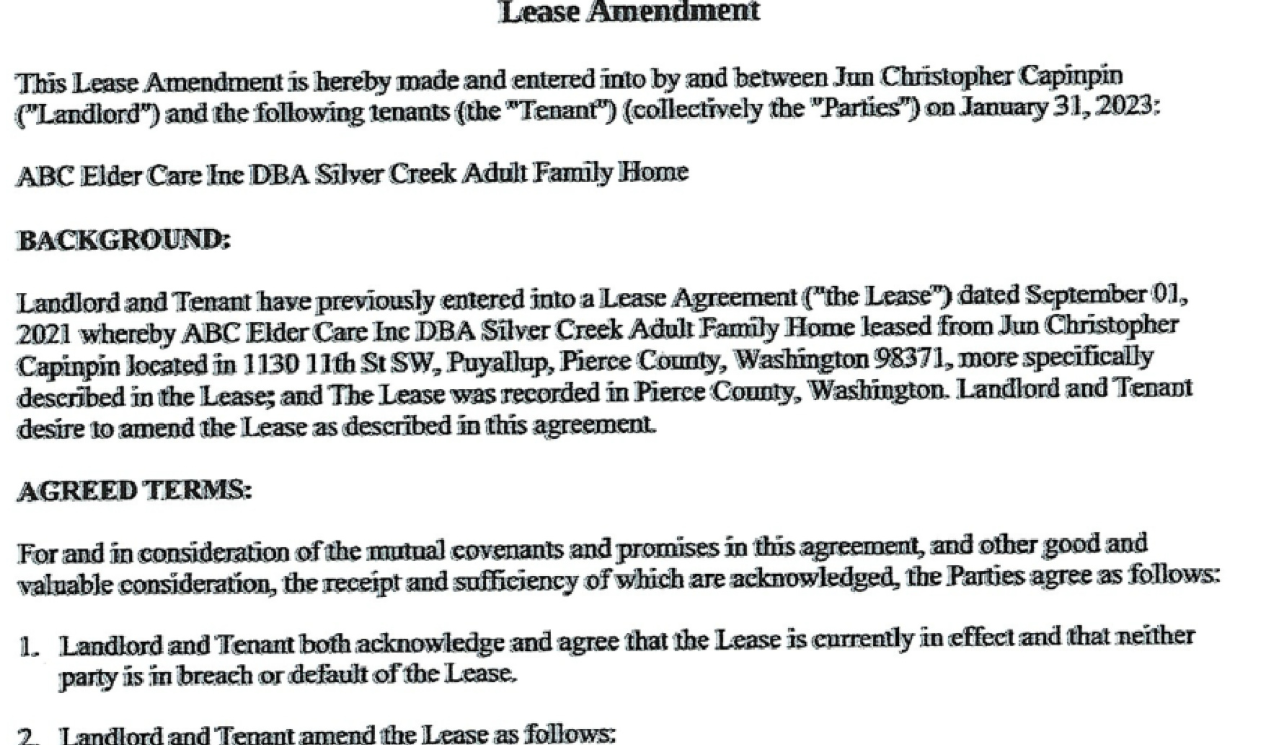
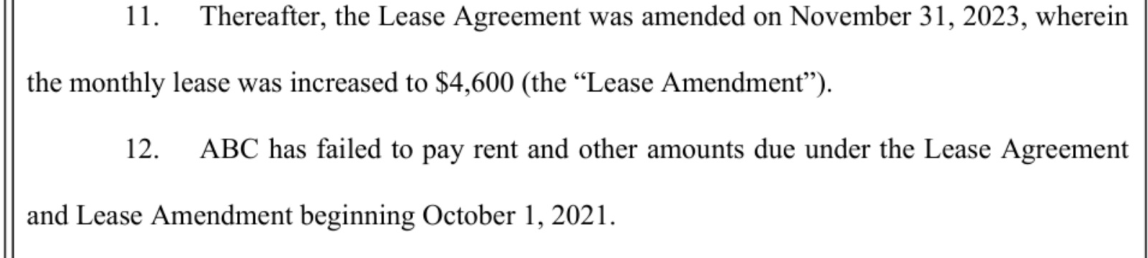
The amendment's no-default recital calls for reconciliation with a claimed arrears period beginning in 2021. Its January 2023 written date and reported September 2024 execution must be kept distinct. The complaint also contains an inaccurate amendment date. Both require accounting, not slogans.
The recital does not prove every later payment was timely, establish the exact period it addresses, or waive future obligations. The complaint's impossible "November 31" date is a drafting mistake on the face of the pleading, not proof of deliberate deception. A complete month-by-month ledger and accommodations remain necessary.
New chapter: the livelihood exchange beside the later possession request →
Go deeper: proposed title routes and the failed closing →
05 / The alternatives and the escalation
The disagreement did not begin with an eviction complaint. There were discussions about shared ownership, reimbursement, a quitclaim-and-refinance route, a purchase agreement and extensions. Those paths had conditions and financing problems. Their existence matters: the later request for removal was a choice made within a much larger dispute.
Our question is direct: why seek possession of the care-home premises when the disagreement concerned a disputed economic arrangement and how to end it? The record establishes alternatives and a later possession demand. It does not establish that every alternative was enforceable, that financing was guaranteed, or that the Capinpins had no contractual remedies.
In the September 2024 exchange, Aileen described the business as our bread and butter and said they would never take it from us. She also insisted that the house and business were separate and proposed deducting renovation expenses before splitting equity.
Read the assurance and its qualification →The November 2025 complaint sought lease forfeiture and possession of the property where that business operated. It did not ask to acquire ABC’s shares. But keeping the company while losing its operating location would not preserve the same livelihood.
Read the actual prayer for possession →Calling the house separate from the business does not make the operating location dispensable. That is the practical contradiction we ask readers to examine. The lease itself identified the permitted use as an adult family home.
On July 18, 2025, Jun offered alternatives that included reinstating a 50/50 arrangement with rental income and contribution accounting, proceeding with the purchase, or selling to another buyer. This was his proposal, not proof that a legal ownership percentage had already been established.
The proposed quitclaim route also involved mortgage-release and preapproval concerns. Aileen’s displayed communication said quitclaim would no longer be an option if a case was filed. That linked a transfer route to litigation, but does not prove an unconditional deed promise or unlawful intent.
The parties signed a purchase agreement and extensions. Jun’s earlier insistence on August 4 did not remain the final date: the signed extension moved closing to August 31. We did not complete the 2025 purchase on that schedule. A fair account cannot call every delay theirs or pretend they refused every extension.
The written addendum contemplated mortgage payoff and settlement costs, with no seller net proceeds expected beyond capped attorney-fee reimbursement. The lender letter still required clean title and expressly disclaimed an obligation to lend. Readers can inspect both the proposed structure and its conditions.
Open the purchase agreement and conditional lender letter — 20 pages · Read the August 4 extension — 2 pages · Read the August 31 extension — 2 pages
Jun also said their next purchase required Silver Creek to close first. The recorded Uplands acquisition dated August 27 supplies a later event that needs explanation. Changed lender conditions or funding could reconcile it; the recording alone does not establish that the earlier urgency was knowingly false.
On September 30, 2024, Jun wrote “buy it as a new owner” and “okies the we will overprice it too.” Romeo’s profanity followed. Jun compared another property transaction; Aileen objected to overpricing Silver Creek, and Jun later apologized and denied plans to interfere with the business. The remark is evidence of an antagonistic position in that exchange. It is not proof of an unlawful later asking price or manipulated appraisal.
Source trail: Preserved I7 narrative pp.17–19; E1-N N27 (July 18 alternatives); E1-S S06 (livelihood assurance); I4-T (purchase dependency and document requests); I4-D (extensions and recording); I3-T (September 2024 exchange); RR03 p.1 and RR01 p.5. Preserved-source index · Full transfer chronology. The full historical source PDFs remain withheld; published comparisons are selected excerpts.
Continue: when a default dispute became an emergencyNOVEMBER 27–DECEMBER 2, 2024
The preserved Renown Mortgage email introduces Chicago Title to prepare a quitclaim deed adding Romeo and Annie to title. A December 2 title-company reply asks about scheduling, and Romeo confirms a Wednesday call. Those are identifiable steps toward a title change, not just a family conversation about one.
The route did not itself transfer ownership, guarantee financing, or release Jun and Aileen from mortgage liability. The later attachment pictured in the compilation references Edgewood and is not treated here as an authenticated Silver Creek deed.
Open the selected, redacted email transcription →Selected transcription from the preserved compilation, pages 1, 3–4; not a native sender-original export.
The earlier lender exchange also records Romeo’s October 31, 2024 pause while the financing direction remained uncertain, his November 11 resumption, and the November 12 proposed sequence. Those steps must stay beside the later title-company introduction.
Open the title introduction and scheduling — 3 pages · Read the lender sequence and our pause — 4 pages
The introduction is a selected email-image record; the earlier exchange is a source-derived transcription. Neither is a funding commitment or proof that a deed was recorded.
FEBRUARY 2025 — DATE IDENTIFIED BY ROMEO
Aileen asked for preapproval and explained why she wanted assurance of a purchase before signing a quitclaim while the mortgage remained in their names. That context matters. She then warned that filing a case would take quitclaim out of the options.
Romeo, who is fluent in Cebuano, attests to this translation of the selected warning: “Keep showing off and file a case, and quit claim will not be in the options.” He identifies the exchange as the February 2025 period when the quitclaim–refinance–release route was being pursued. The screenshot displays February 21 without a year; the year comes from his attestation.
The contrast is specific: a proposed title route was discussed alongside a warning about litigation. This message does not establish a completed transfer, guaranteed financing, or a hidden motive. The preceding preapproval and mortgage explanation remain beside the warning for readers to examine.
Read the warning, surrounding context and author attestation — 3 pages
Follow the July case, October petitions, service and November merits outcome →
06 / The pressure beyond the deed
The October 20, 2025 letter claimed $22,605.28 due and threatened removal and collection. On October 21, the Capinpins sought emergency protection against Romeo and Annie. The connection is in their petitions: anticipated default enforcement and removal proceedings were invoked as reasons they feared retaliation.
That is more than proximity on a timeline. It is the applicants’ own explanation of how the property confrontation entered the asserted emergency. It does not establish that their fear was invented or that their attorney directed a false filing.
For us, the consequence was simultaneous work: protect the care-home location, answer allegations about personal conduct, preserve the source context, and keep the business operating. A claim about danger can affect a reputation long before a full hearing tests it.
A selected excerpt from Annie’s October 21 petition connects anticipated default and removal proceedings to feared retaliation. It is a petitioner’s allegation, not a finding. The immediate-weapons Yes/No boxes visible in this excerpt are unmarked.
Open the one-page source excerpt →The petitions requested mental-health evaluations. Romeo’s petition also sought immediate weapons surrender while marking present firearm ownership and immediate firearm threat unknown, and prior weapon use against the petitioners no.
A requested remedy was not a diagnosis or a finding of dangerousness. Romeo’s temporary-order cover marked no weapons surrender and no firearm-possession prohibition. Requested restrictions and ordered restrictions must be read separately.
The July antiharassment petition used Romeo’s genuine “I will destroy you” language. The preserved source dates that message to October 1, 2024, within a dispute over investment, equity and livelihood. The petition also referred to harassment since approximately October 2024 and included recent hostile July messages. The issue is missing or compressed context, not an invented quotation.
On July 24, temporary relief without notice was denied and a full hearing set. Jun then requested withdrawal after consulting counsel. That July sequence was not the November merits hearing. We keep the two proceedings distinct.
The document titled “POLICE REPORT STATEMENT” filed October 24 was a party-prepared statement, not an officer’s independent finding. Its filing stamp was 12:27 p.m.; the service report recorded service at 12:30 p.m. This comparison concerns the earlier Cora exchange. It does not resolve every form of notice or establish an impossible violation.
A separate later family-chat allegation generated the October 27 sheriff’s report, incident 2530000948.1. The report records Jun saying he had left the group and saw messages on a relative’s iPad. Deputy Harmes advised him to avoid the chat and that device. That source route differs from a direct message sent to the petitioners, while intended indirect contact remained disputed.
The filed declaration and agency narrative also identify different speakers for one remark. Jun’s November 4 correction separately acknowledged that the restraints statement he attributed to Annie came from another participant. Annie’s medication references remained. A correction establishes an inaccurate attribution; it does not establish knowing falsity.
The supplied report’s active status is not a final criminal disposition. A December 4 police review also treated the underlying events as real and considered false-reporting charges very unlikely. Our challenge concerns context, attribution and characterization; it does not require pretending the words or encounters never occurred.
A SEPARATE REGULATORY TRACK
The September 2025 Residential Care Services matter concerned staffing, pay, training, resident safety and provider conduct. RCS investigated September 30, sampled all six residents, issued no citation and identified no facility failed practice in the reviewed areas. It also stated that labor issues were outside its authority and that 2021 resident records were outside the available retention window.
On November 5, the day after the protection-order merits hearing, DSHS transmitted a separate vulnerable-adult-abuse referral, Intake 200859, to the nursing board. The identified complaint against Annie alleged financial exploitation of a patient. WABON closed it without investigation at screening because it was below threshold and a nursing violation was not identified; its assessment reflected continued closure after additional DSHS information.
We will not let serious allegations stand without their recorded outcomes. Those outcomes are also limited: neither establishes a universal exoneration, malicious reporting, or the identity of an anonymous complainant. The record does not establish that Jun or Aileen authored these complaints, or that the September intake and November referral had a common source.
Source trail: RCS Investigation Summary, Intake 194932 / CD65963, September 30, 2025; agency-findings packet EX-0018 and EX-0020; DSHS Intake 200859 referral and WABON case 2025-17807RN. Agency scope and source trail. No resident records, confidential intake or reporter-identifying material is reproduced.
THE WRITTEN OUTCOME / What they sought and what the court found
The October 21 petitions expressly connected anticipated retaliation to upcoming default and removal proceedings. On November 4, the court denied the requested protection orders after hearing the dispute. These are documented outcomes, not our speculation about why the petitions were brought.
The underlying petitions included family-related allegations. E12 displays a separately preserved court addendum, not the missing attachment from the compiled U8 PDF. Its contact warning and the limitations of the one image are shown as well.
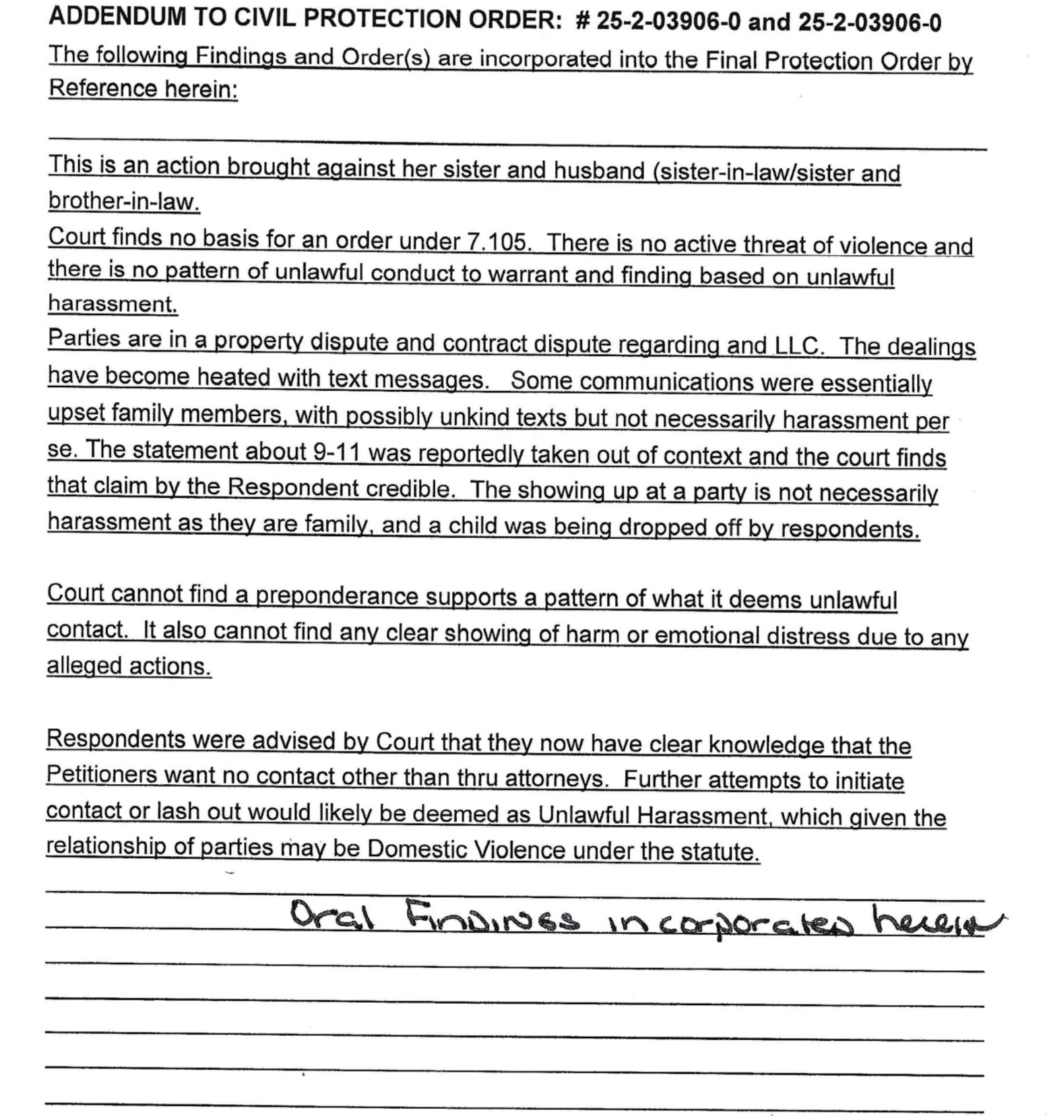
The two signed November 4 orders rejected the requested protection relief. In the separately preserved E12 addendum, the court expressly says it found no basis for relief under RCW 7.105, no active threat of violence and insufficient proof of a prohibited harassment pattern; the court also accepted a respondent's explanation that the “9-11” statement had been taken out of context. This is a meaningful judicial finding, not just a dismissed paperwork filing.
Romeo's hostile messages and the court's contact warning remain part of the history. The denials did not find knowing fabrication or bad-faith petitioning, and a finding of inadequate proof for an order does not determine every subjective fear claim. The property lawsuits ended separately without a trial judgment of every underlying claim.
Source trail: C3 “When a Lease Default Became a Protection-Order Emergency,” S01–S12; RC4 source comparison; July case 5A650856A and July 24 cancellation email; November cases 25-2-03906-0 and 25-2-03908-6. The written findings excerpt is E12. Confidential service-risk forms and privileged advice are excluded. No uncertified hearing transcript is presented here as an official quotation.
Continue: the relief they sought—and the ownership claim we brought07 / The remedy they demanded
The November 24, 2025 complaint did not merely seek a conversation about rent. It asked for lease forfeiture, restoration of possession and a writ enforceable by the sheriff. That was the site where Silver Creek residents lived and employees worked. The recorded July 2026 warranty deed later conveyed the property to Romeo and Annie.
ABC was still carrying costs near the finish. Its business bank records show a July 7, 2026 bill payment of $3,629.35 to Jun—only weeks before the deed was recorded. March and May 2026 statements also show $3,798.68 payments. These are traceable company outflows while the Capinpins remained named borrowers/titleholders; a complete lender-level posting reconciliation is still needed before describing every monthly installment as verified.
Under the January 29, 2026 settlement, the parties mutually released claims and agreed to dismissal; the settlement expressly disclaims admissions of liability. The recorded deed documents the eventual negotiated acquisition, not a judicial award of title on the merits.
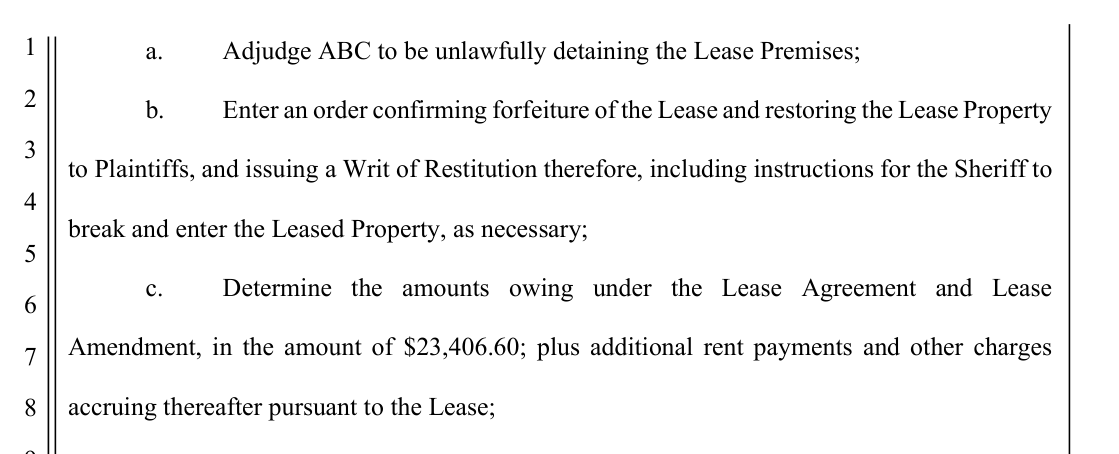
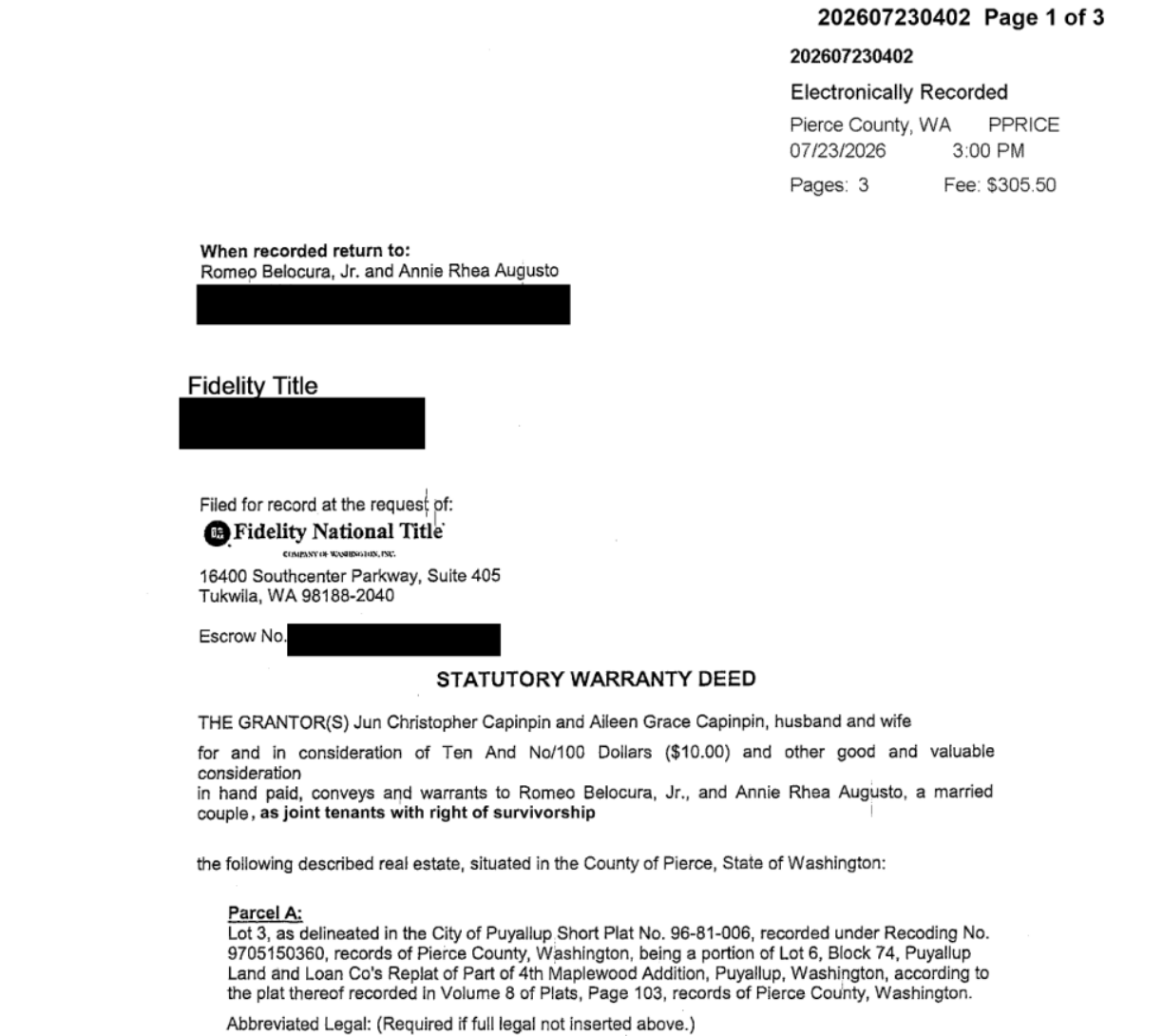
The Capinpins sought to displace ABC from a property Romeo and Annie helped finance and operated as an adult family home. A transfer of title ultimately followed. Both are on paper.
The deed was a negotiated acquisition endpoint, not a judicial finding that the prior possession request was tortious or that the Capinpins had no title or mortgage exposure. The complaint was not a successful eviction. Actual resident displacement from that complaint has not been established.
All five supplied filed pages are available with the preserved editorial cover. Claims and requested remedies remain allegations and requests. Public-reader cover labels are updated; the reviewed evidence and redactions are retained.
Open the six-page complaint packet →The complaint filed November 24 sought possession in case 25-2-13363-5. Our separate damages and equitable-relief complaint sought a declaration of equitable ownership, constructive or resulting trust, quiet title and related relief. The court docket confirms filing on December 29, 2025, in case 25-2-14126-3. December 26 is the date on the prepared complaint; it is not the docket filing date.
Our complaint records our allegations. The acquisition payments, messages and performance are the evidence readers should test beside them. We were not the 2025 record owners, and no court awarded the disputed historical title to us on the merits.
The February 10, 2026 recorded release, number 202602100142, identifies the January 9 lis pendens, number 202601090102. A lis pendens gives notice of litigation affecting title; it is not an ownership judgment or an automatic ban on sale. It belongs in the account of how we formally asserted the dispute, not as proof that we had already won.
The property cases ended through settlement and dismissal, separately from the protection-order merits decisions. The July 23, 2026 recorded deed is the conveyance endpoint. We secured the home through that negotiated purchase. That outcome does not decide every allegation made along the way.
The entered orders now supply the terms behind the docket entries: the ownership action was dismissed with prejudice on February 3, 2026, and the eviction action on February 4. Both followed the parties’ settlement stipulations. Neither order determines whether either side’s underlying factual allegations were true or false.
Open ownership dismissal order — 3 pages · Open eviction dismissal order — 3 pages
Source trail: November 24 complaint RR01 pp.4–5; supplied December 26 complaint pp.1–2; December 29 e-file receipt and court case record created that morning; recorded release RR33; deed RR24. Ownership filing and date correction · Lis pendens record · RCW 4.28.320. The original case schedule is historical, not a current trial listing.
WHAT WE ARE ASKING THE PUBLIC TO EXAMINE
Jun and Aileen Capinpin held recorded title and bore real borrowing obligations. Romeo and Annie supplied documented acquisition money, built and operated the home, and pursued a title transfer. The later eviction complaint cannot be read fairly without that history. Neither the settlement nor the final deed is a trial verdict against the Capinpins. But neither makes the earlier language, payments, signed amendment and requested eviction irrelevant.
We reject an account that reduces our role to tenants being removed while skipping the acquisition money, the venture, the work and the disputed equity. The seriousness of a possession request lies in its foreseeable reach: an operating location, the investments tied to it, employees’ work and residents’ continuity. Those consequences deserve scrutiny without a claim that anyone’s hidden intention has been judicially proved.
The house is secured. The evidence remains. Our reason for publishing is to answer allegations with the documents, protect the reputation on which our care business depends, and allow readers to reach their own conclusions.
Source note: This is Romeo and Annie's advocacy account. This edition uses selected privacy-cropped or re-encoded documentary excerpts, not a full source archive. A fluent native Cebuano speaker who is a party has confirmed the translation accuracy to the best of his ability; that is not independent verification of native message attribution. The July 2025 email is present only as an earlier quoted email in a reply. The 2025 protection orders were denied; the court also warned against unwanted contact. The property litigation ended without a merits judgment of the disputed claims. The underlying records and contrary evidence should be read alongside the selected excerpts.